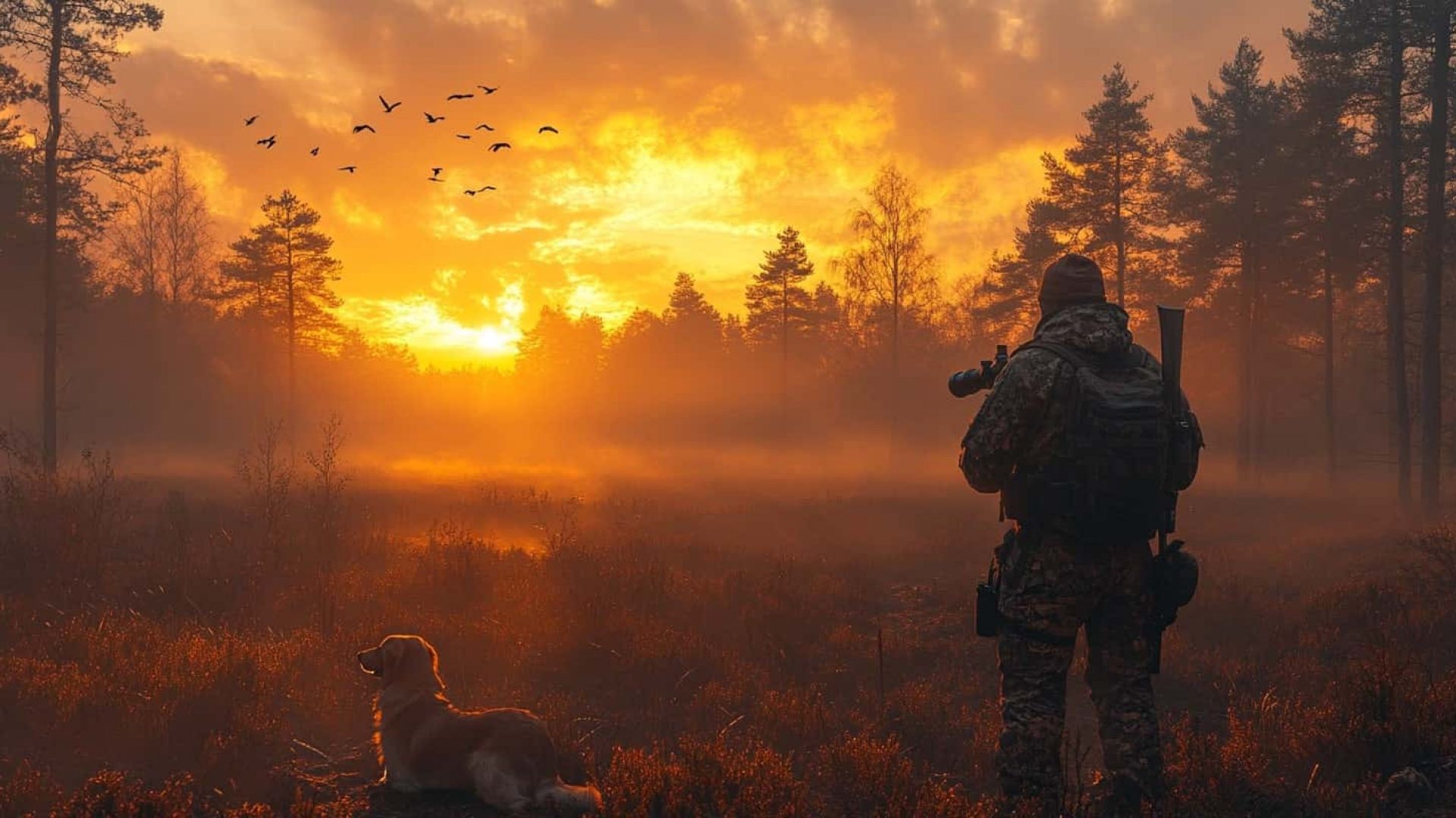
Making the Right Call on a Guided Hunt: A Practical Approach
When you're out in the field hunting things don't always go as planned. You might see an animal. Its partially hidden behind branches or thick brush. All you can make out are an antlers or a shoulder and that's not enough to be sure. Your guide hasn't said it's okay to shoot and doubt creeps in. That's the moment when preparation and clear thinking matter most. Making the right call isn't about rushing. It's about knowing when to act and when to hold back.
Establish Decision-Making Protocols Before Departure
Before you even leave the camp or the truck sit down with your guide and talk through the rules. What kind of animal are you looking for? What's the legal age, gender and season? What should you do if you're not sure? These are not questions. They can make the difference between a hunt and a mistake.
Agree on standards. For example if the animal is a buck or one that doesn't meet the tag requirements you don't shoot it. No matter how tempting it looks. Also decide how you'll handle uncertainty. Make a rule: If either of you has any doubt the answer is no. Wait. Don't guess.
Check the regulations together. Laws can change from year to year. Even from one area to another. Don't rely on your guide's memory. Look it up. Know your tag limits the zones you're allowed in and any special rules about harvesting. This is your responsibility as a hunter.
Communicating with Your Guide
Misunderstandings happen fast when you're in the field. When your guide says, "That one " do you know which animal they mean? It could be an animal altogether. That's why clear communication is not optional. It's essential.
Before you even start looking agree on how you'll refer to animals. Use landmarks. Say, "The one behind the pine " or "The one with the broken tine." Use terms instead of vague words like "that" or "the big one."
Also clarify your guide's role. Are they the one making the call?. Are they there to help you confirm what you see? Know what your expectations are. If the guide is telling you to wait don't assume they're just being cautious. They're helping you avoid a decision.
If you're not sure ask. If your guide says something that sounds unclear don't move forward. Say, "Can you confirm. Are we sure that's the one we're after?" A quiet "I'm not sure" is better than a shot that could go wrong.
Differentiating Identification from Shot Viability
Just because an animal is legal doesn't mean it's a shot. You need to ask two questions:
1. Is this the animal I'm allowed to harvest?
2. Am I in a position to make a ethical shot?
The first is about identification. The second is about the conditions. Even if you're certain of the animal's identity if there's a branch in the way if the angle is bad or if the wind is blowing hard the shot might not be ethical.
Look at the animal's body. Can you see the vitals? Is the animal standing still? Is it behind cover? Is there a path to the heart or lung area? If the answer is no to any of these the shot isn't right.
Also observe the animal's behavior. If it's tense moving fast or surrounded by others it may not be the moment. Sometimes it's better to wait. For light for the animal to turn or for it to move into a clearer position.
Utilize Pauses Wisely
Hunting is not a race. It's about patience. When things aren't clear don't rush. Take a breath. Step back mentally. Ask yourself: What do I still need to know?
Do I have a view of the animal's head? Can I see its antlers or horns clearly? Is the guide confident? Are there obstructions in the shot path? If any of these are missing take a pause.
If the animal is moving into cover or if the light is fading it may be time to let it go. Don't chase it into uncertainty. That's not how ethical hunting works.
Remember, a missed opportunity is not a failure. A wounded animal is a failure.. The only way to avoid that is by making calm deliberate decisions.
Keep a Compact Checklist on Hand
When excitement rises your judgment can get fuzzy. That's why a checklist is a tool. It keeps you grounded.
Here's a simple checklist you can use before any shot:
– Legal identification: Is the animal the species, age and gender? Does it match your tag?
– Mutual reference: Are you and your guide talking about the animal?
– Clear view: Can you see the body parts for identification and safe shot placement?
– Safe conditions: Is the animal at a distance? Is the wind in your face? Is there cover in the way?
– Recovery plan: Where will you go? How will you track it? Who stays behind?
– Timeout signal: What phrase or gesture means "stop" if either of you feels unsure?
This list isn't a solution. It's a reminder to slow down. It keeps you honest. Use it before you take a shot. Use it again if the animal moves or the light changes.
Emphasizing Ethical Decision-Making
Hunting is about respect. For the animal for the land and for the sport. Ethics aren't a side topic. They're the core.
Talk to your guide before the hunt about recovery procedures. Who marks the seen location? Who stays behind if the animal is wounded? What happens if it's dark or the terrain is difficult?
Also know your rules around tagging, reporting and reporting wounded animals. Some areas require notification. Others have tagging times.
When you say "I can't confirm" or "the angle is wrong " you're not showing weakness. You're showing strength. You're standing by your ethics. You're protecting the animal's chance to survive. That's what real hunting is about.
Reflecting on Decisions Post-Hunt
After the hunt take time to think. What went well? What didn't?
Ask yourself:
– What could I have identified better?
– Was my communication with the guide clear?
– Did I rush a decision?
– Did I let doubt guide me to wait?
If you passed on a shot write down why. If you took one review whether the identification and conditions were truly solid.
This reflection builds confidence. It sharpens your skills. Over time you'll learn to read animals accurately to communicate more clearly and to make better decisions. Even in high-pressure moments.
Good hunting isn't about the shot. It's about the call.. That call comes from preparation from patience and from a deep respect, for the hunt itself.